
Manage Smarter 299 — Identifying and Surviving Fear-
HOSTED BY C. LEE SMITH AND AUDREY STRONG
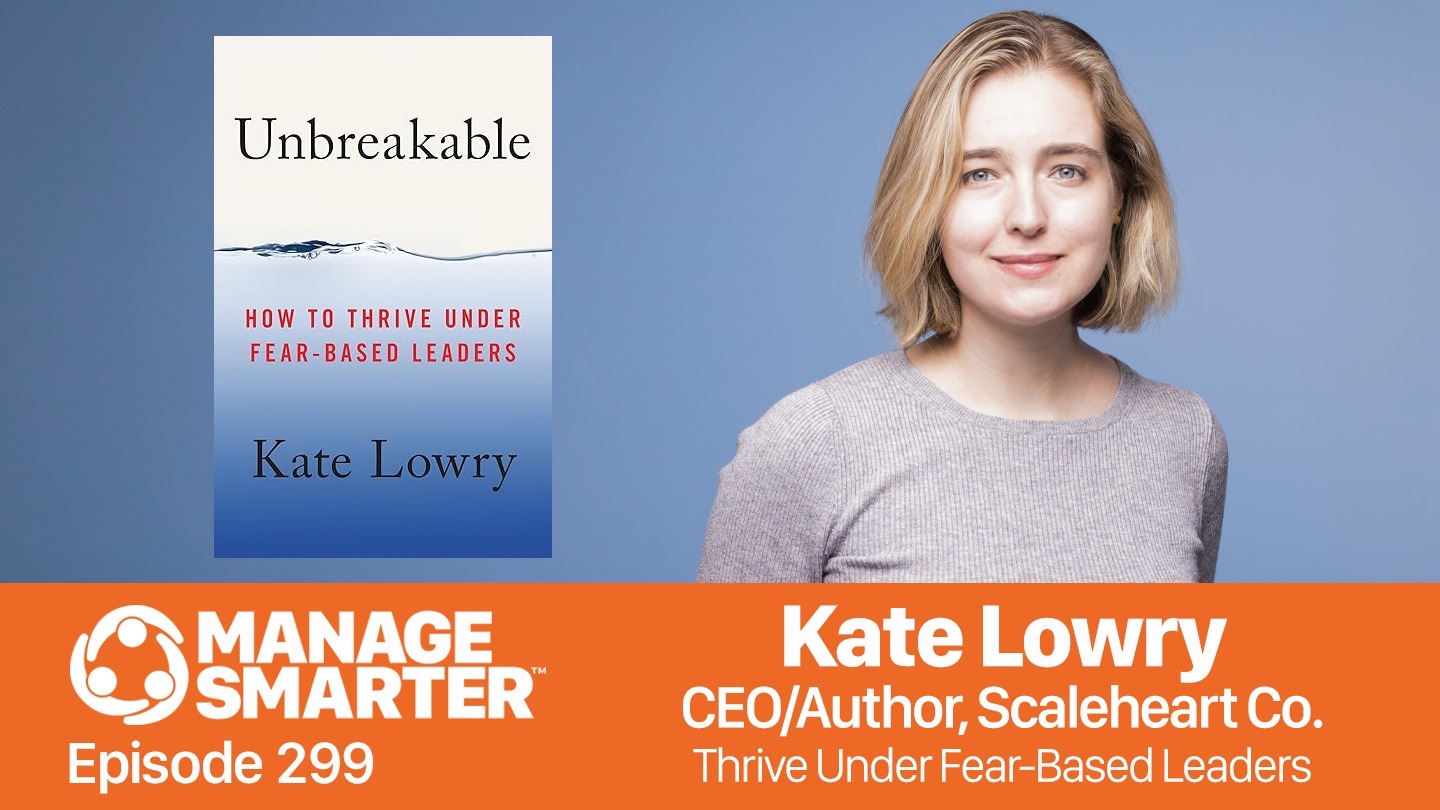
How can I protect myself and still perform when I work for a boss that manages through fear? Employees under fear‑based bosses must recognize red‑flag behaviors early, set non‑negotiable “red lines,” and document patterns. Using emotional‑self‑defense, seeking allies, and managing up with calm, factual communication helps protect mental health, maintain performance, and buy time to plan an exit or role change when needed.
In this episode, CEO coach and venture capitalist Kate Lowry discusses the growing epidemic of fear-
Kate reveals why fear-
In this podcast for sales managers and executive leadership, Audrey Strong, C. Lee Smith and Kate Lowry help you to answer:
What is the current prevalence of fear-
Fear-
How does fear-
Fear-
What strategies can middle managers use to protect their teams from toxic leadership?
Kate Lowry recommends the 'crap umbrella' strategy, where middle managers act as a buffer between fear-
What warning signs indicate a leader is causing a toxic culture or high churn risk?
Warning signs include increased sick days, lower team performance, higher employee or client turnover, and teams going around their manager to escalate issues. Kate Lowry emphasizes the importance of using anonymous pulse surveys and informal feedback channels to spot retention challenges and fear-
How can those responsible for revenue distinguish between real churn risk and customers using fear tactics to negotiate?
Evaluating opportunity costs and switching barriers: if a customer frequently threatens to leave but faces high costs to switch providers or lacks viable alternatives, the threat is likely a tactic for leverage, not genuine churn risk. Kate Lowry recommends quantifying the value delivered and strengthening customer relationships to avoid unnecessary price concessions.
"The first way is to make sure you never tell them what you actually care about. People like this will try to take away or target the things that are important to you so that they can manipulate you and cause big reactions."
Kate Lowry
Connect with Kate Lowry:
- Website: www
.katelowry .com - LinkedIn: https://
www .linkedin .com/ i n / k a t h e r i n e j l o w ry/
Build Credibility and Effective Leadership with the Manage Smarter Show:
- Website: ManageSmarter
.com - LinkedIn: Audrey Strong
- LinkedIn: C. Lee Smith
Connect with SalesFuel:
- Facebook: https://
www .facebook .com/ s a l e s f u el/ - Website: https://
salesfuel .com - X (Twitter): @SalesFuel
#workplace #badboss #toxicleadership #workplaceintimidation #HR #workplacefear #dysfunctionalboss